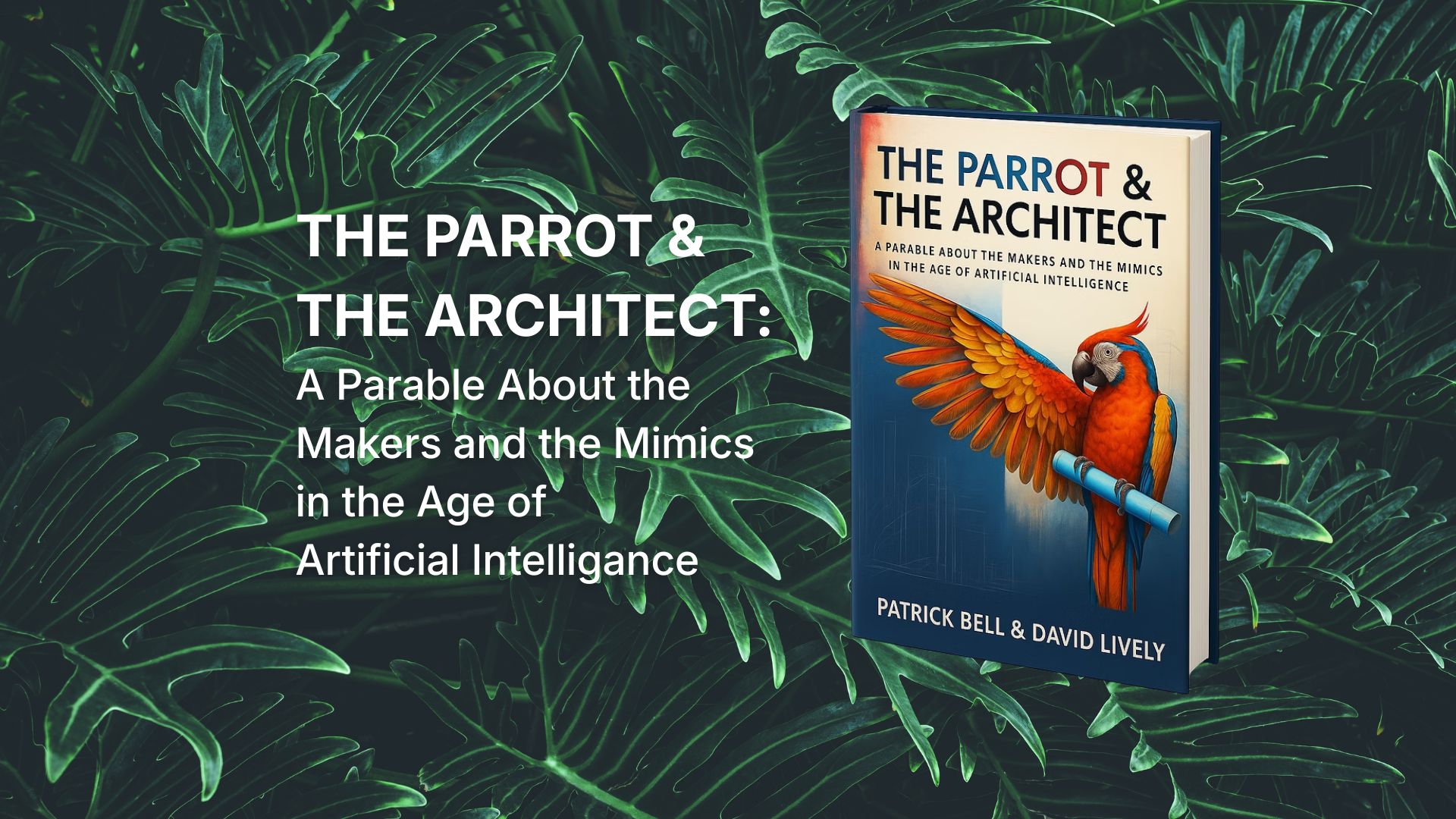
Most Leaders Are Imitating.
Very Few Are Architecting.
A parable about leadership, expertise, and clarity in the age of Artificial Intelligence.
In the age of AI, imitation scales faster than understanding.
This book explores why so many organizations confuse noise for progress—and how a few build systems that outlast them.
The Hidden Split Happening in Business
AI hasn’t just accelerated execution; It has exposed a deeper divide in leadership.
Some leaders repeat what they’ve heard and they do so confidently, loudly, and at scale.
Others design—quietly, deliberately, and with consequences in mind.
The gap between those two groups is widening.
This book doesn’t teach tools.
It examines how leaders think when tools become abundant.
What This Book Is (and Isn’t)
This book is:
- A parable about modern leadership
- A psychological look at expertise vs imitation
- A strategic lens on AI-era decision making
- A mirror for executives who care about durability
This book is not:
-
A tool guide
-
A trend report
-
A productivity hack
-
A playbook for shortcuts
If you’re looking for tactics, this won’t satisfy you.
If you’re responsible for outcomes, it probably will.
Why This Matters Now
AI lowers the cost of appearing competent.
It does not lower the cost of being wrong.
As automation spreads, organizations don’t fail from lack of tools.
They fail from poorly designed thinking, unclear ownership, and fragile systems.
This story was written to surface those failure points—before they become expensive.
Who This Book Is For
This book is written for:
-
CEOs and founders
-
Senior operators
-
Consultants and advisors
-
Leaders responsible for systems, not slides
It is not written for:
-
Performers chasing visibility
-
Leaders outsourcing thinking
-
Organizations looking for shortcuts
If that distinction feels uncomfortable, that’s intentional.
About the Authors
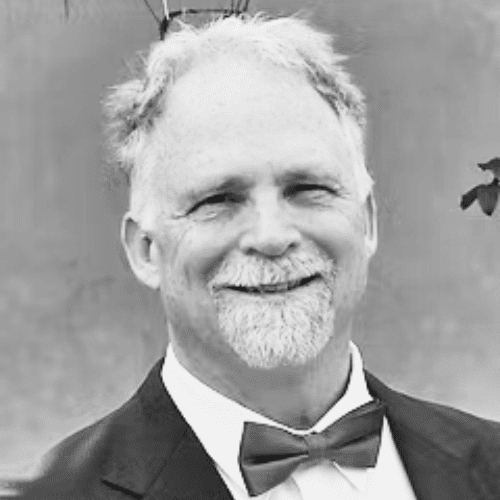
Patrick Bell is a strategist, advisor, and doctoral researcher focused on how organizations adopt artificial intelligence in the real world.
He is completing his doctorate in artificial intelligence at the Swiss School of Business and Management, where his research examines why many AI efforts fail—and what leaders must build instead.
Before that, Patrick spent years designing software systems and frameworks for business growth. Along the way, he helped train thousands of consultants and advisors, many of whom learned how to repeat ideas well, but not how to design systems that last.
That experience led him to a clear conclusion: clarity does not come from more information. It comes from better structure.
Today, his work helps leaders move beyond tools and trends to build thinking systems that scale.

David Lively is the CEO of Studio98.ai and a seasoned entrepreneur who has built and sold multiple companies, including scaling one to nine figures.
His work focuses on turning AI from a set of tools into real business infrastructure. Rather than automating tasks in isolation, David helps companies embed AI into operations where decisions, process, and accountability matter.
He has worked with hundreds of organizations to replace fragile, people-dependent execution with systems that can scale without burning out teams.
His approach is practical, disciplined, and focused on outcomes—not hype.
Together, they work with leaders who understand that clarity is not a personality trait but something you build.
What Happens After This Book
Most readers finish this book with the same realization:
Understanding the problem is not the same as fixing it.
The book clarifies why most AI efforts fail.
The work that follows is about designing what replaces them.
Some readers stop at insight.
Others reach out when they’re ready to build.